
And the hidden cost to business
VOICE OF THE PRIVATE SECTOR – What OHS is not measuring
Voice of the Private Sector
The Fiji Times – 29 April 2026
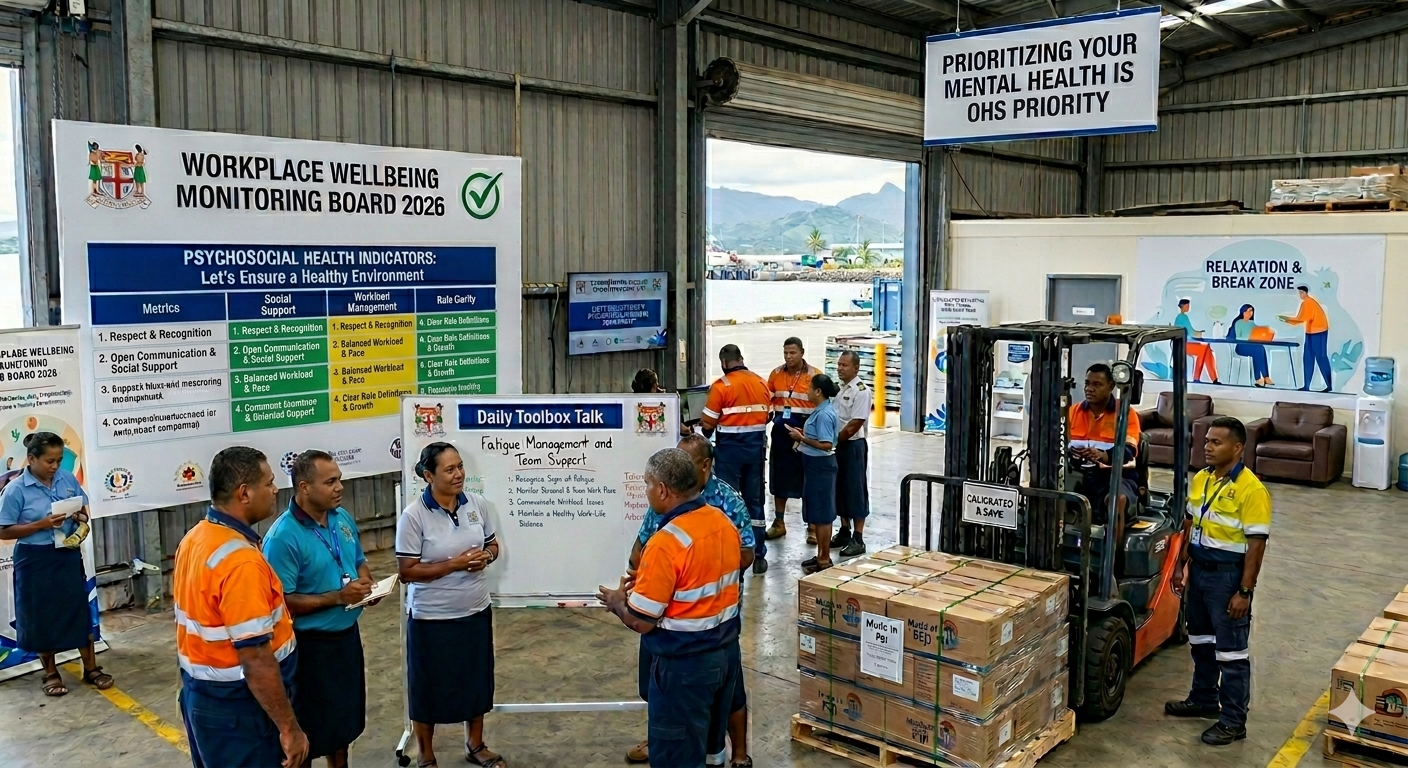
Last week, we highlighted the growing impact of psychosocial health on productivity, including the often-overlooked cost of presenteeism — where employees are physically present but operating below capacity due to mental or emotional strain. This week, as we move from awareness to evidence, a clearer and more concerning picture is emerging.
Psychosocial health refers to how work is designed, organised and managed, and the broader workplace environment in which it takes place. When these factors are poorly managed; through excessive workloads, unclear roles, long working hours, job insecurity or workplace conflict, they create risks that directly affect both worker wellbeing and business performance.
Recent global estimates underscore the scale of the issue. The ILO SafeDay Report (2026) reports that psychosocial risk factors are linked to more than 840,000 deaths annually and nearly 45 million years of healthy life lost. The associated productivity losses are estimated to account for 1.37 percent of global GDP each year.
While these figures are global, the implications for Fiji are increasingly evident, particularly when viewed alongside national occupational health and safety trends. However, the absence of robust national data on workplace psychosocial health means the issue remains largely unmeasured and under-recognised.
Data from the Ministry of Employment shows that an average of 347 occupational health and safety (OHS) infringements are recorded annually, with more than 1,000 notices issued over the past three years. These are concentrated in sectors such as construction, transport, manufacturing, mining and sawmilling — industries traditionally associated with physical risk.
However, what is notably absent from this data is any consistent classification or reporting of psychosocial risks in the workplace.
This gap is significant. It suggests that while workplace safety is being monitored and enforced, the current system remains primarily focused on visible and immediate physical hazards, with psychosocial dimensions of work not yet systematically measured within OHS reporting frameworks.
Insights from recent employer and worker engagements further reinforce this reality. There is currently limited awareness of psychosocial risks, no dedicated legislative or policy guidance, and minimal integration of these issues into workplace dialogue or negotiation processes. While workplace wellness frameworks increasingly recognise mental health and stress, psychosocial risks are not yet consistently addressed through structured, risk-based approaches.
For employers, this creates a challenging environment — one where the impacts of stress, fatigue, and mental strain are evident in productivity, absenteeism and workforce engagement, but without the systems or data needed to respond effectively.
At the same time, compensation data points to the broader economic cost of workplace health issues. Over the past three years, workplace injury claims have amounted to millions of dollars annually. While these largely reflect physical incidents, they highlight the scale of financial impact when risks are not adequately managed.
The absence of data does not indicate the absence of risk, it highlights a gap in how risk is understood, measured and prioritised.
Globally, there is a clear shift towards recognising psychosocial risks as an integral part of occupational health and safety systems. Modern approaches focus on prevention at source; addressing how work is structured, how workloads are managed, and how leadership and organisational culture influence employee wellbeing.
For Fiji, this presents an important opportunity.
Addressing psychosocial health does not require a complete overhaul of existing systems, but rather a more intentional expansion of them. It means integrating psychosocial risk assessment into current OHS frameworks, strengthening awareness and capability among employers, and improving data collection to better inform policy and practice.
In light of World Day for Safety and Health at Work 2026, commemorated on 28 April at the Civic Centre in Suva, the conversation must move beyond whether psychosocial health matters. The focus now needs to shift toward how effectively it is recognised, measured, and managed as a core component of workplace wellbeing, productivity, and national economic performance.
Ultimately, what is not measured is not managed — and what is not managed will continue to carry a cost.
■ FIJI COMMERCE & EMPLOYERS FEDERATION