VOICE OF THE PRIVATE SECTOR – From collection programme to national system
Voice of the Private Sector
The Fiji Times – 19 May 2026
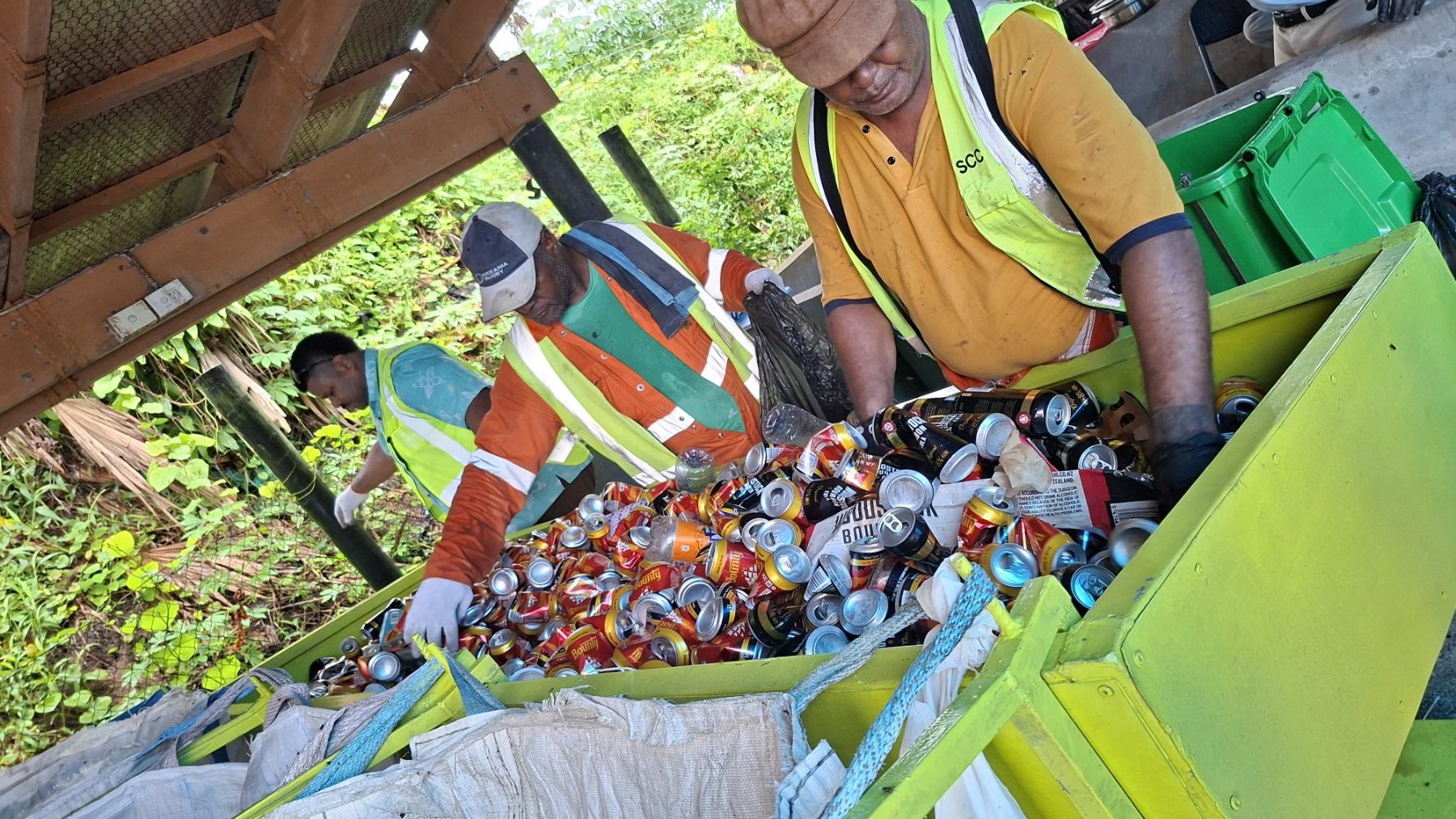
Return and Earn Fiji is a national not-for-profit backed by eight beverage companies. Its national rollout is built on nearly three decades of beverage container collection experience. Developed in 1999 by Mission Pacific, the programme originally recovered plastic bottles and aluminium cans for Coca-Cola Europacific Partners Fiji, Fiji Water and later Sprint. The programme has since transformed into a proven collection model with a broader national system.
That transformation matters because it marks a shift from a brand-specific recovery effort into a nationally coordinated, community-driven and industry-funded system. Mission Pacific showed us that beverage container collection could work in Fiji. Return and Earn Fiji takes that operational experience, and expands on it – from three supporting companies to eight. In doing so, it opens the system to eligible containers of any brand making it a practical national response to waste, recycling and circular economy goals – turning individual company collection efforts into a shared stewardship model, with the scale to support a coordinated network, stronger reporting, dedicated processing infrastructure and wider public access.
It reflects a bigger change in how post-consumption packaging is being managed in Fiji: not as an afterthought but as a shared national responsibility.
How the system works
The public-facing design is simple but powerful. Members of the public can return eligible plastic bottles and aluminium cans of any brand to their nearest collection centre and receive five cents per container.
Behind that simplicity is a national delivery model in which municipal councils are central partners, operating centres in towns and cities, making the scheme visible in communities and helping turn recycling into part of everyday civic life.
A phased rollout with visible momentum
Return & Earn was fist piloted in Sigatoka Town Council in June 2025, where it was demonstrated that a council-led refund model could work in practice. From there the system expanded into Lautoka, Nadi, Lami, Suva, Nausori and Ba.
The programme is already producing measurable results. Sigatoka’s early pilot collected 184,000 beverage containers in three months and returned more than $9,000 to participants. By the first quarter of 2026, council-led centres in participating municipalities had collectively recovered over 2 million containers in just three months and $175,000 paid out in refunds and handling fees.
Those figures show that when the system is easy to access and people are rewarded for participating, recovery can flow quickly from idea to habit.
This is what makes Return and Earn Fiji more than a recycling campaign. It is infrastructure in motion: municipal centres collecting containers, warehouses in Suva and Lautoka processing PET and aluminium material fed from a national network built throughout the country’s 13 municipalities to make returning beverage containers accessible and visible across the country.
Value for communities, not just recyclers
One of the strongest features of the system is that it creates value beyond the recycling sector itself. Households, schools, sports groups, faith-based organisations and community groups can all participate and benefit. A five-cent refund may seem small in isolation but across hundreds or thousands of containers it becomes a meaningful source of support for fundraising, clean-up campaigns and community activity.
Sporting organisations are also helping lead this shift by building beverage container collection into major competitions and public events. Return and Earn Fiji has already been promoted through the Wai Tui International regatta, Drua rugby matches and Oceania Swimming Championships where organisers provided collection bags, then direct bottles and cans to council-led collection centres.
More that 20,000 beverage containers were collected at the Coca-Cola Games National Championship. Additionally, tourism properties are also beginning to link with municipal councils for container collection, showing how the model can extend beyond public events into Fiji’s visitor economy and strengthen recovery pathways in high-volume hospitality settings.
Together these examples show how Fiji’s sporting calendar and tourism sector can help turn recycling into a visible national habit by linking competition, community participation and environmental responsibility in the same public space.
Municipal councils also benefit as delivery partners through handling fees and stronger local waste recovery systems. In practice the system links households, councils and industry in the same value chain. What was once treated as litter becomes a resource with social, economic and environmental value.
The environmental gains are immediate. Containers that might otherwise end up in drains, rivers, coastlines or landfill are collected, sorted and prepared for recycling. But the bigger significance lies in what this represents for Fiji’s future: a practical move toward circular economy thinking, where packaging is designed to be recovered, reused and kept in productive circulation.
In that sense, Return and Earn Fiji is part of a bigger national transition. It supports Fiji’s broader movement toward product stewardship and future container deposit regulation by showing how a coordinated system can work in real communities with real incentives, real partnerships and real results.
Follow their progress on https://www.facebook.com/p/Return-Earn-Fiji-61581008861535/
■ FIJI COMMERCE & EMPLOYERS FEDERATION