VOICE OF THE PRIVATE SECTOR – Psychosocial Health, Workplace Productivity
Voice of the Private Sector
The Fiji Times – 22 April 2026
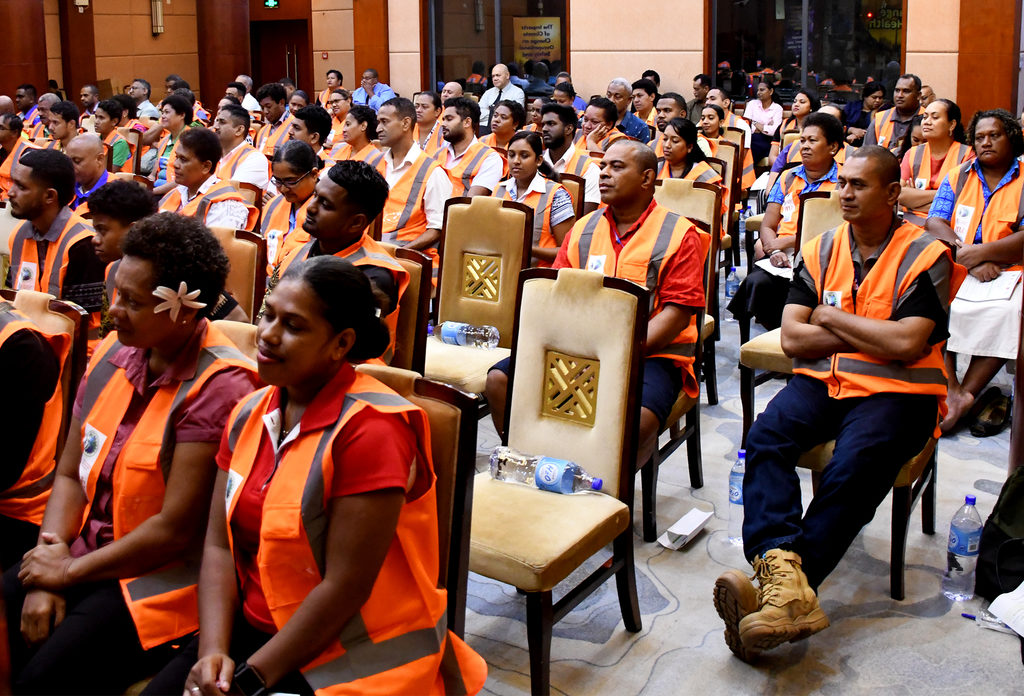
April 28, 2026 marks World Day for Safety and Health at Work, and this year’s theme — “Let’s ensure a healthy psychosocial working environment” — challenges businesses to confront a risk that is largely invisible, rarely measured, but increasingly shaping productivity, workforce stability, and business performance.
In today’s environment, how people experience work, not just where they work, is quickly becoming a defining factor in whether businesses can sustain growth.
Unseen risk in the workplace
Workplace health and safety frameworks have traditionally focused on physical hazards. However, global institutions including the International Labour Organization (ILO) and the World Health Organization (WHO) are now emphasising psychosocial risks; how work is designed, organised, and managed.
These include high job demands, low control, job insecurity, long working hours, and poor workplace relationships. While less visible than physical hazards, their impact is cumulative and far-reaching.
A key challenge is that these risks remain under-measured, particularly in smaller and developing labour markets. What is not measured is rarely prioritised.
The productivity link
The productivity impact of poor psychosocial health is increasingly quantifiable. While absenteeism is often the most visible outcome, the larger and more persistent cost to businesses is presenteeism — where employees are physically present but operating below full capacity.
The ILO estimates that 12 billion working days are lost globally each year due to depression and anxiety, highlighting the scale at which mental health affects labour productivity.
More detailed longitudinal research reinforces how this plays out at the enterprise level. A recent study published in the European Journal of Health Economics found that employees experiencing moderate to high psychological distress had significantly higher rates of absenteeism, presenteeism, and underemployment, all of which directly reduce workplace output. Ref
There is growing consensus, supported by international research, that presenteeism contributes an even greater loss of productivity than absenteeism.

Trend in the proportion of presenteeism and underemployment from a research paper on Psychological distress and productivity loss: a longitudinal analysis of Australian working adults in the European Journal of Health Economics.
The same study found that psychological distress resulted in additional annual productivity losses of up to $3,600 AUD annually, per employee, driven largely by reduced performance while at work.
At a global level, the World Health Organization estimates that mental health conditions already cost the global economy trillions of dollars annually, with the majority of these costs linked to lost productivity rather than direct healthcare expenditure.
Intensifying the risk is Fiji’s operating context
These workplace realities are unfolding against a backdrop of mounting national health and social pressures that are directly affecting the labour force.
The Fiji 2025 Steps Survey highlights that non-communicable diseases (NCDs) remain the single greatest health challenge in Fiji, accounting for over 80% of all deaths, while national data also shows that 11.6% of adults experience symptoms of depression. At the same time, Fiji is confronting a growing HIV burden, with health authorities and partners including the WHO highlighting the need for strengthened responses, alongside an escalating drug problem increasingly impacting communities and workplaces.
Taken together, these trends are not isolated public health concerns, they are workforce issues. They influence attendance, reliability, cognitive performance, and long-term participation in the labour market. For employers, this translates into a workforce that is not only smaller, but under increasing health and social pressure.
A shrinking and more competitive labour market
These pressures are further intensified by underlying labour supply constraints in Fiji’s economy.
According to the Fiji Bureau of Statistics, unemployment remains relatively low at around 5.7%, indicating limited spare capacity in the domestic labour market. In practical terms, this suggests that most available labour is already engaged, leaving businesses with fewer options to draw from when recruiting or expanding their workforce.
At the same time, outward migration continues to place additional pressure on the availability of skilled workers, particularly in critical occupations such as health, trades, and professional services.
This dynamic is reflected in Fiji’s reliance on overseas employment income. World Bank data shows that personal remittances account for over 7% of GDP, underscoring the scale of labour mobility and the ongoing contribution of Fijians working abroad.
For employers, the combined effect is a smaller and more competitive talent pool. This increases competition for skilled workers and places greater pressure on businesses to not only attract but also retain employees in an already constrained environment.
When viewed alongside rising health and social pressures affecting the workforce, this constraint becomes even more significant — as businesses are increasingly required to do more with a workforce that is both limited in size and under strain.
Why a proactive approach makes business sense
Not every business can compete on wages alone. However, every business can influence the quality of its work environment.
Addressing psychosocial health does not necessarily require high-cost interventions. It begins with:
- Designing manageable workloads
- Strengthening leadership and communication
- Building a culture of fairness, respect, and trust
- Providing flexibility where operationally feasible
These are practical, scalable actions that can deliver measurable improvements in engagement, retention, and productivity.
In Fiji, Wellness Programmes is a common practice across the multiple businesses we spoke to –programmes such as:
➡️ Wellness through movement programmes: early finish to move the body through sports or exercises.
➡️ Talanoa by the tanoa programmes: access to Senior Management via open, relaxed, talanoa style discussions
➡️ Employee Assistance Program (EAP): confidential counseling and support for employees and their families to manage work or personal challenges.
➡️ Wellbeing initiatives, events, activities, informal gatherings, etc
➡️ Flexible working i.e. early/late starts, work from home days, etc
The theme of this year’s World Day for Safety and Health at Work is a timely reminder that workplace health must evolve alongside the realities of modern work.
■ FIJI COMMERCE & EMPLOYERS FEDERATION